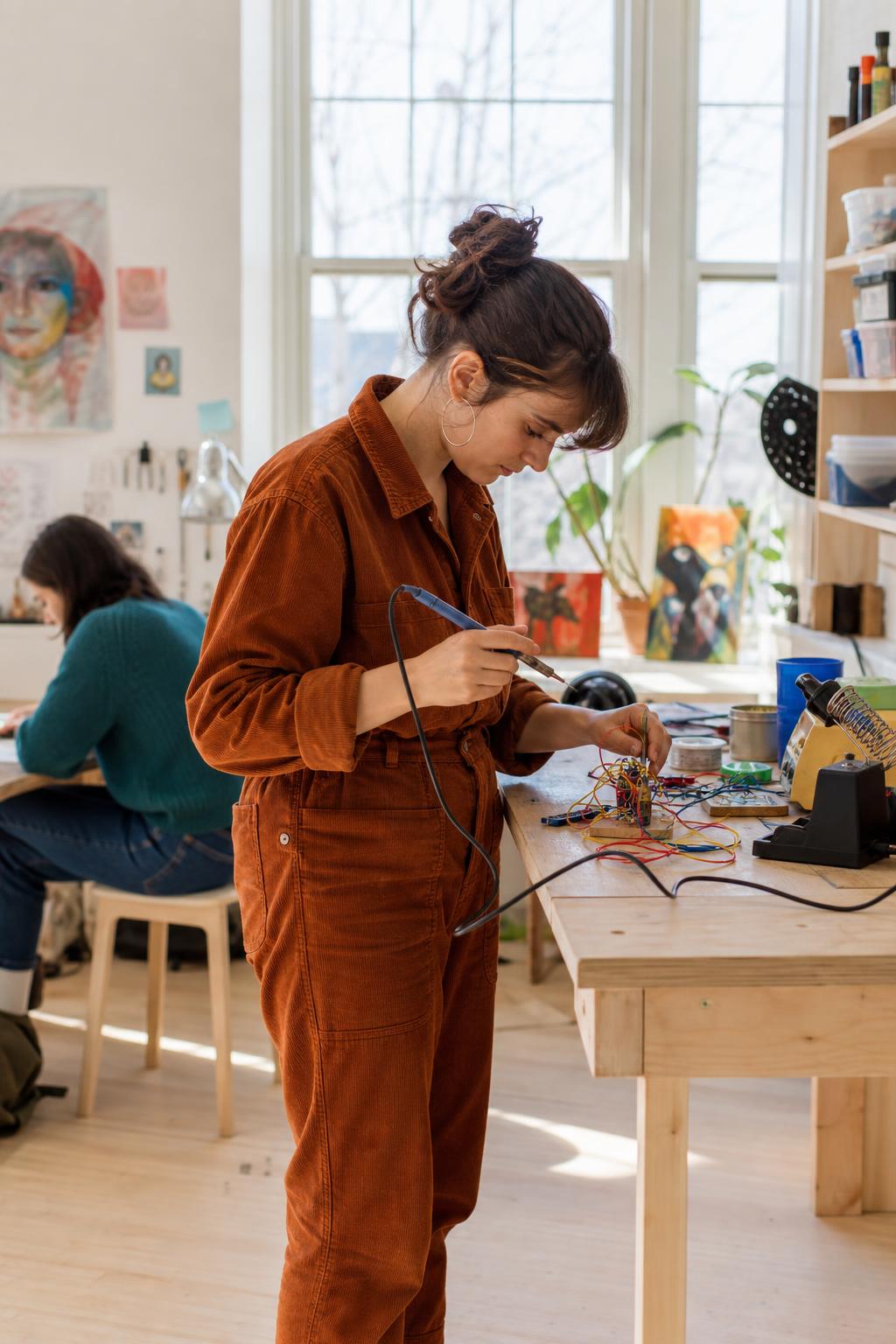
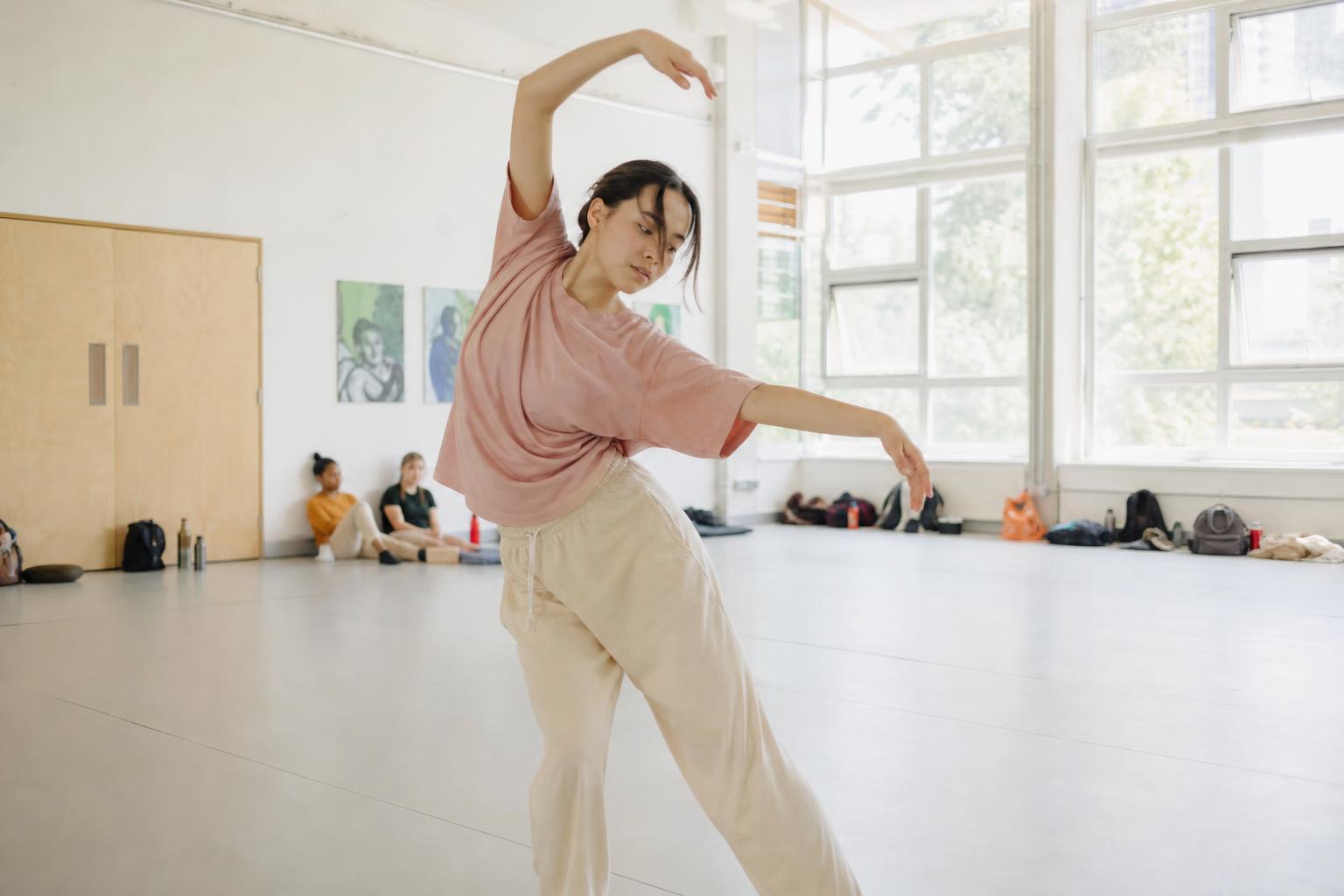
Every studio clears out for it. For one week at the end of April the kilns go cold, the screen beds are scrubbed back to bare mesh and the stages are struck, and three floors of the building become a single exhibition of the work our leavers made this year. It is hung by the students who made it, and for most of the nine days they are in the room beside it, ready to tell you how any of it was done.

The show opens on Friday 1 May at six in the evening and runs until Saturday 9 May. It is free, there is nothing to book, and it is open to anyone: families, other schools, people who live on the street and have always wondered what goes on behind the long windows on the corner.

What is in it

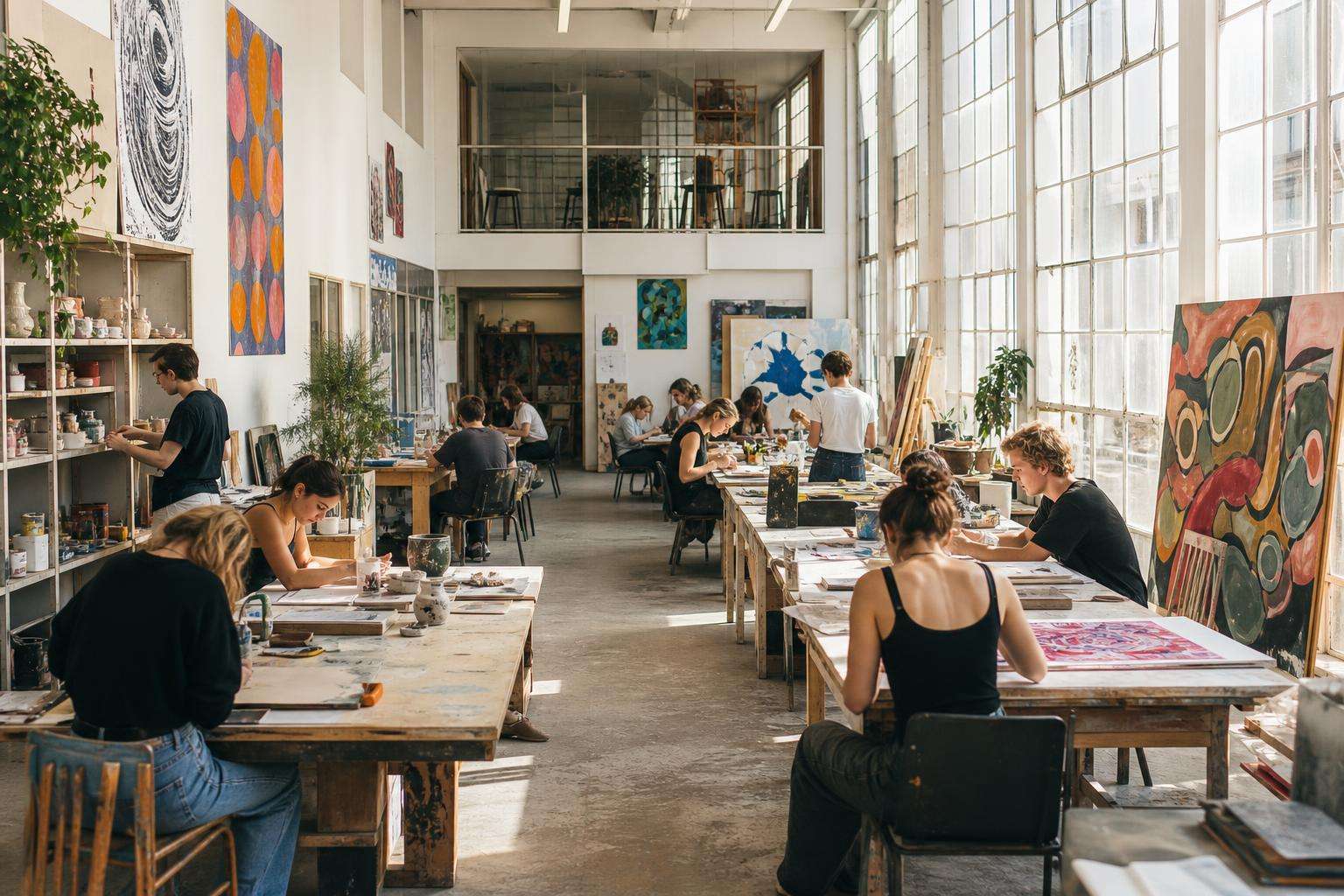
Around ninety leavers are showing, from the sixth form and the Portfolio Year. Each has a wall, a plinth, a screen or a booth, and each chose what goes in it. Some are showing a single piece they have worked on since September. Others are showing thirty small things, because the thirty small things were the point.

  • Ceramics fills the ground floor, including the first pieces out of this spring’s wood firing.
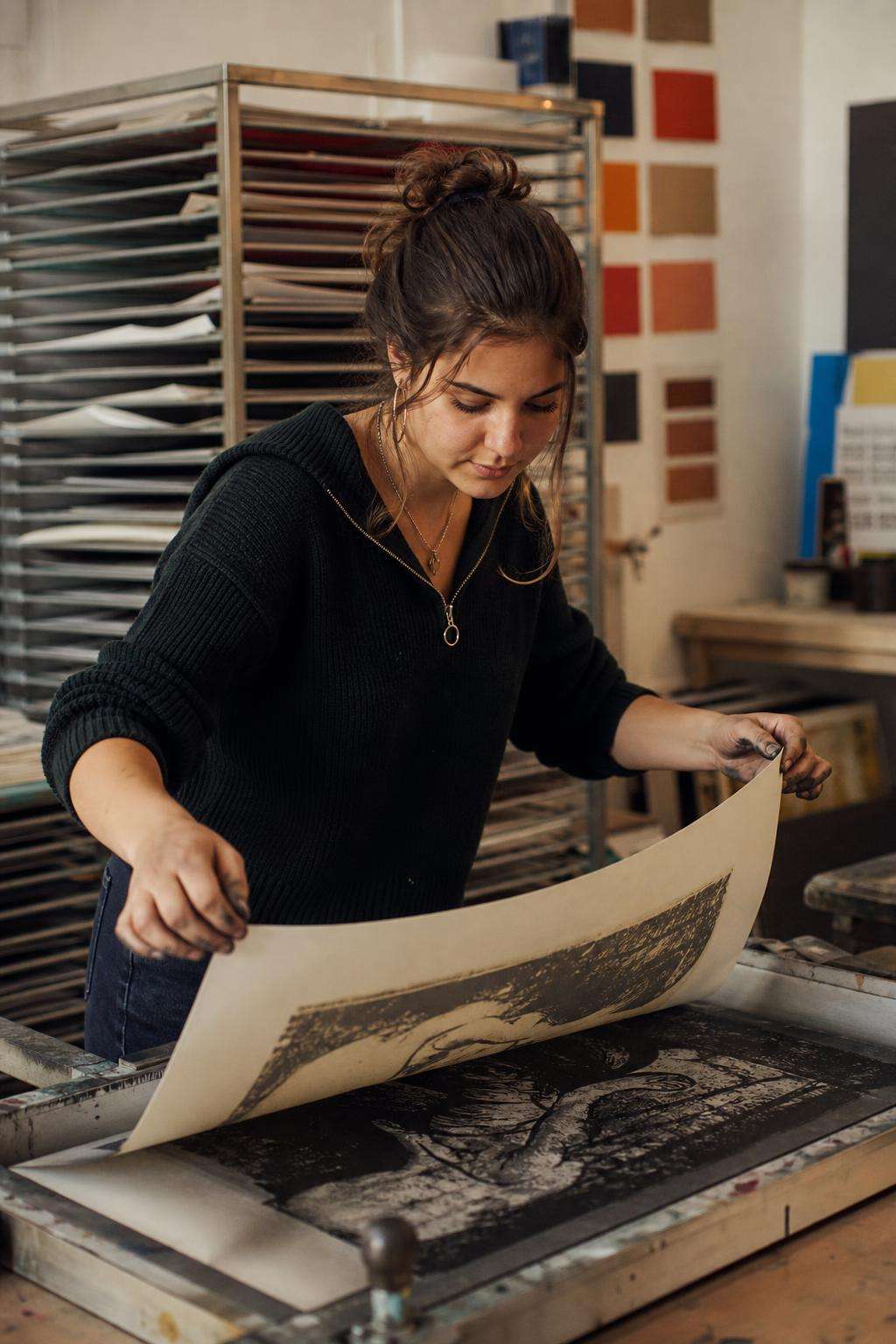
  • Print and metal takes the long gallery: etchings, screen prints and two forged pieces that needed four people to carry up the stairs.
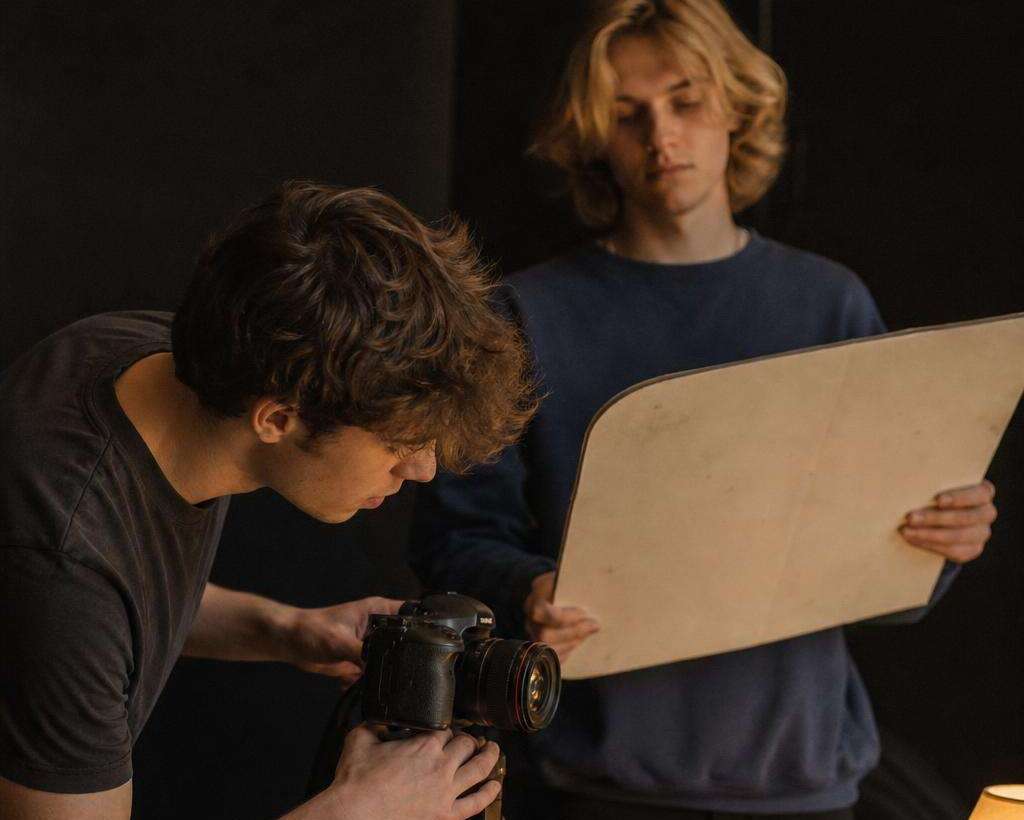
  • Moving image runs in both blackout stages, on a loop, with a printed timetable at each door.
  • Sound is in the booths and the live room. Headphones are provided; the live room is not quiet.
  • Painting, drawing and textiles share the main hall, which is the room most visitors remember.
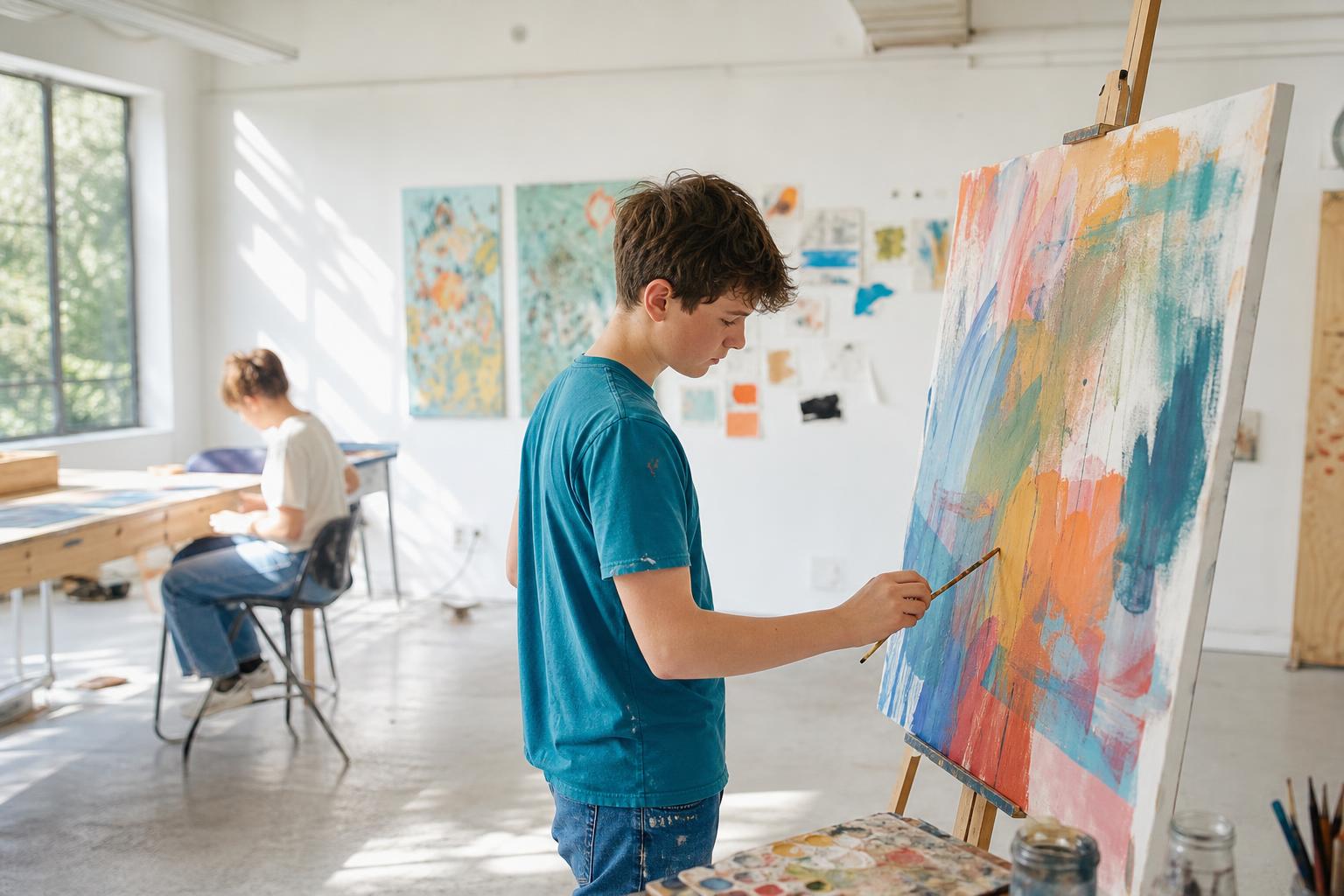
A student painting at an easel in a bright studio
The last week in the painting studio. Much of what hangs on Friday was still being changed on the Tuesday before.

Hung by the people who made it

There is no curator. The technicians put up the walls and run the power, and after that the hang belongs to the students. They measure, argue, move each other’s work by a few centimetres and move it back. It takes most of a week, and it is one of the few times the whole year group works on the same thing at the same time.

It is also, quietly, the last lesson of the year. A piece that looked finished in the studio can look unfinished on a white wall under proper light, and there is still time to do something about it. Several of this year’s leavers did.

Nobody here hangs your work for you. If it looks wrong on the wall, that is the last thing the school has to teach you.

Adam Holloway, Head of School

When to come

DayOpenWhat is on
Friday 1 May6pm – 9pmOpening evening. Every maker is in the building.
Saturday 2 to Tuesday 5 May10am – 5pmThe show, with students on every floor.
Wednesday 6 May10am – 9pmLate opening, workshops lit.
Thursday 7 to Saturday 9 May10am – 5pmThe show. It closes at five on the Saturday.
Nine days, free, no booking.

The Wednesday late

On Wednesday 6 May the building stays open until nine and the workshops downstairs are lit, with a technician in each. It is the best evening to come if you want to see how the things upstairs were actually put together: the kiln room, the etching press, the grade suite, the booths with the patch cables still in them.
Coming with children, or with a portfolio

The show is a good first visit for families thinking about the school, because nobody is performing for you. On the Saturdays someone from Admissions is on the front desk from ten until four, and will happily walk you round, answer questions about entry or just point you at the room your child keeps drifting back to.

If you are applying yourself, come and look at what the Portfolio Year produces. It is the clearest answer we can give to the question of what the year is for.

Do I need to book?

No. Walk in during opening hours. Groups of more than fifteen are asked to email ahead so the students on duty know to expect you.

Is the whole show accessible?

Yes. There is a lift to all three floors, and the stages and booths have step-free entrances. The live room is loud; ear defenders are at the door.

Can I buy work?

Some of it. Where a maker has chosen to sell, a price is on the label, and everything goes to the maker except a small amount for next year’s materials fund.


Most of what is on the walls started as something else in September. Come and see what it turned into.
The Kiln Prize goes to work in fired clay by anyone under nineteen, and it is judged blind: the panel sees the piece and a hundred words from its maker, and nothing else. No names, no schools, no portfolios. Two of the six pieces on this year’s shortlist came out of our ceramics studio.

They belong to Maya Okafor, in the sixth form, and Theo Lindqvist, in the Portfolio Year. Neither of them made the piece they set out to make, and both of them rebuilt their work more than once before it went to the judges. That, as it turns out, is the part of the process the prize tends to reward.

Judged blind

Entries arrive from art schools, sixth-form colleges, community studios and a surprising number of kitchens. Around four hundred were submitted this year. The panel, three working potters and a curator, narrows them to six over two days in a room with the entries on trestle tables and the labels turned face down.

Because the judging is blind, the shortlist is the first moment anyone outside the studio knows whose work it is. Maya found out in a Wednesday critique, when a technician walked in holding a letter and the room stopped talking.

Neither of them made the piece they set out to make. Maya’s cups were supposed to be a single jug. Theo’s vessel collapsed twice on the wheel. The finished work is better because of both of those things, and the judges could see it.

Nadia Bergström, ceramics technician
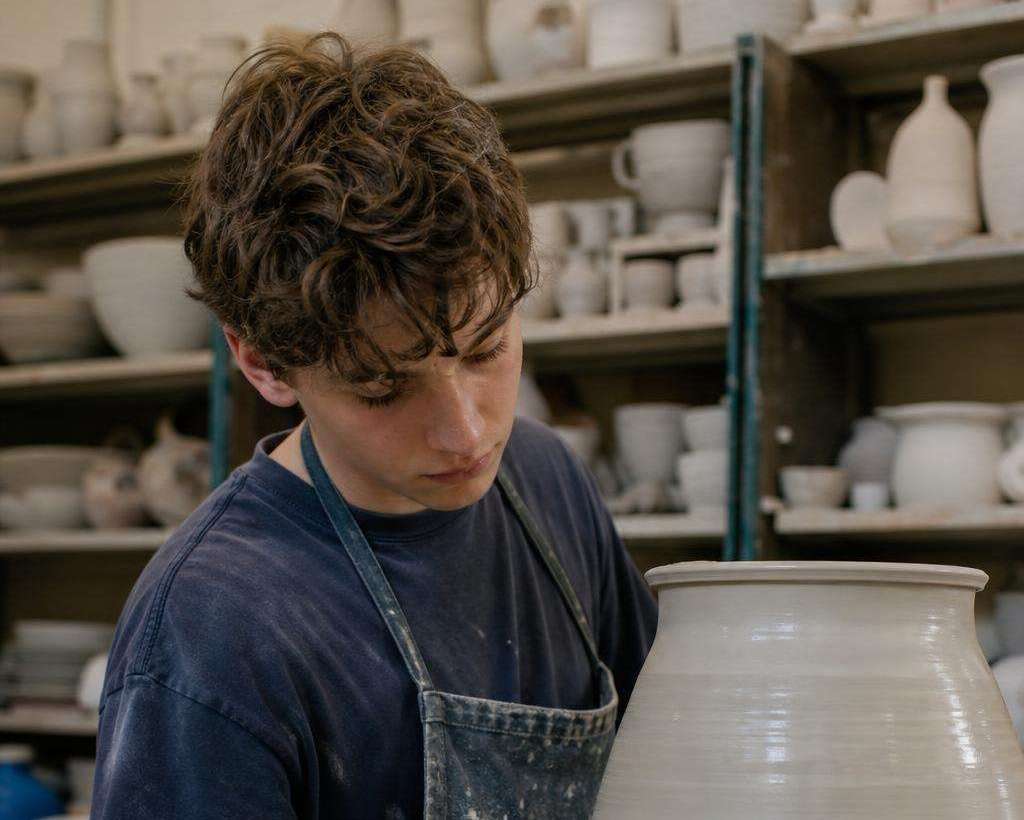
A student in an apron in front of shelves of unfired pots
The ceramics studio shelves. Everything on them is waiting for a firing.

Two pieces, rebuilt

Maya Okafor, sixth form

Maya’s entry is a set of eleven cups, thrown in porcelain and glazed in a single pale celadon, each a little shorter than the one before. It began in October as a jug. The jug would not hold its handle, and after the third attempt she cut the body into rings to see where the wall was failing, liked the rings more than the jug and started again with cups.

The set took four firings to get right. The first glaze crawled, the second was too green, and the third cracked two of the cups in the kiln, which is why there are eleven rather than twelve. Her hundred words for the judges end with the sentence: the missing cup is part of the set.

Theo Lindqvist, Portfolio Year

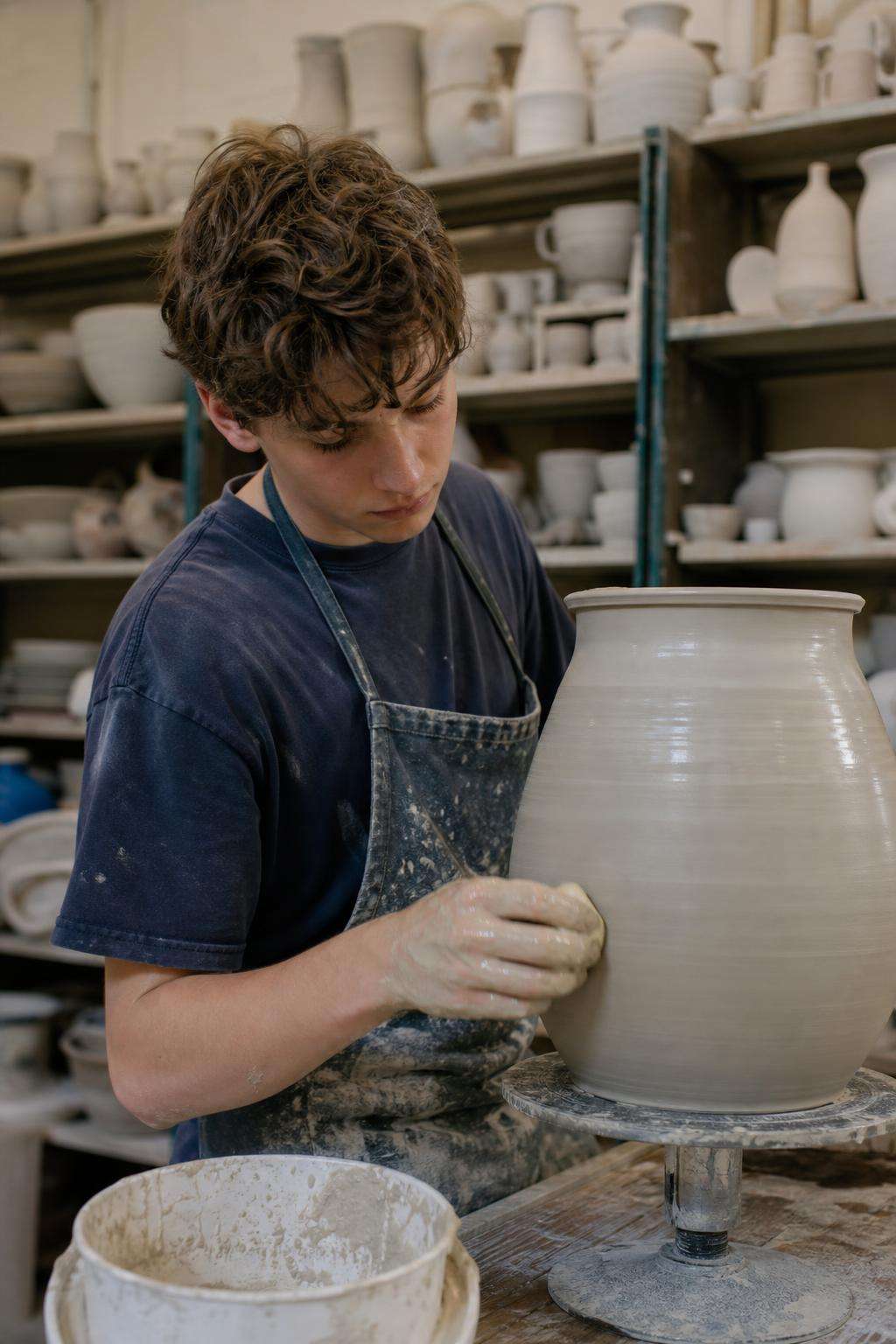
Theo’s piece is a single tall vessel, just under a metre, fired in the school’s wood kiln. It collapsed twice on the wheel at full height, so the version that survived was built in three thrown sections and joined when leather hard. The joins are still visible under the ash glaze, and he decided to leave them that way.

A student holding a large thrown pot in the ceramics studio

Four firings a year

The wood kiln is fired four times a year over two-day shifts, and anyone who has work in it takes a turn at stoking through the night. Theo’s vessel went into the spring firing.

  • Lit at six in the evening
  • Stoked in two-hour shifts
  • Held at temperature for a day
  • Opened after three days of cooling

What happens next

  1. All six shortlisted pieces travel to the prize exhibition in June, where they are shown alongside a selection from the long list.
  2. The judges see the six pieces together, in person, for the first time.
  3. The winner is announced at the opening, and receives a bursary for materials and a week in a working pottery.
  4. Every shortlisted piece is shown for a month afterwards, and then comes home to the studio.

The missing cup is part of the set.

Maya Okafor, from her statement for the judges

Whatever happens in June, both pieces will be back on the ground floor for the degree show, and both makers will be in the building to talk about them. The ceramics studio is open to anyone who knows how to use it until ten every night, and the wheels are rarely all free.


Ada Reyes joins the digital studio this week for six weeks, working with the sixth form and the Portfolio Year on field recording and composition for installation. She is the third visiting practitioner this year and the first to work in sound.

Her own work is mostly made outdoors, recorded over long walks through places most people drive past, and finished in a room she describes as the size of a cupboard. She says that is the only honest way to describe most studio practice, and she intends to spend six weeks proving it.

Six weeks, in three parts

  1. Weeks one and two: listening. Recording walks around the school and the streets near it, with a portable recorder each and one rule: record for twice as long as feels necessary.
  2. Weeks three and four: editing. Back in the lab, cutting hours of material down to minutes, and learning to hear what was actually recorded rather than what was meant to be.
  3. Weeks five and six: installing. Each student places a finished piece somewhere in the building, for a specific spot and a specific listener.
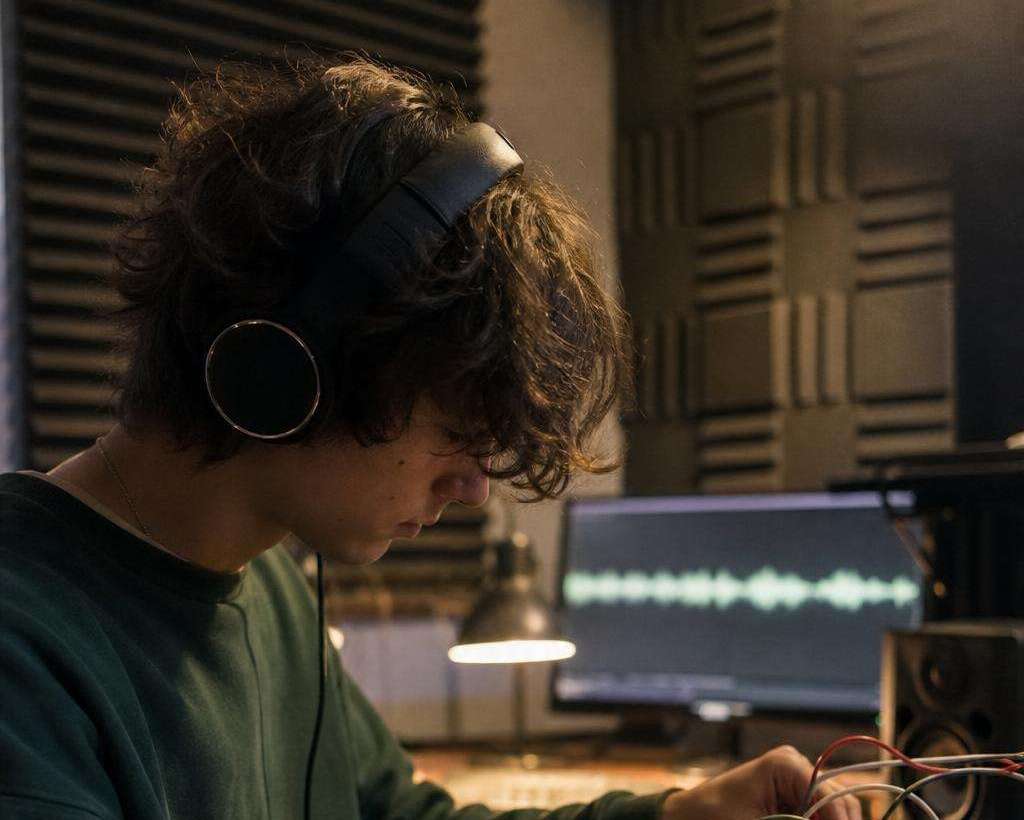
A student in headphones working at a mixing desk in the sound lab
The sound lab, where Ada’s editing sessions run on Tuesday and Thursday afternoons.

In her words

People imagine a studio as a big bright room. Most of mine have been cupboards, and the cupboard is not the problem. The problem is going into it with nothing. I want these students to come back from a walk with too much, and then learn what to throw away.

Ada Reyes

Ada trained as a violinist, stopped playing at twenty and spent the next ten years recording rivers, car parks and the insides of empty buildings. Her installations have been shown in a disused swimming pool, a multi-storey car park and, once, a lift. She is interested in what a sound does to a room, and what a room does to a sound.

For the students, the attraction is partly the kit and partly the permission. A recorder and a pair of headphones go further than most people expect, and a piece of work that lives in a stairwell does not need a gallery to exist.

What the students are making

Eleven students signed up for the residency, from first-year sixth formers who have never recorded anything to a Portfolio Year student who has been building a modular synthesiser since September. Their starting points are already wildly different. One is recording the kiln room through a firing, from lighting to opening. Another has spent two walks under the railway bridge at the end of the road, waiting for the gap between trains. A third wants to record the building at night, empty, and play it back in the dining hall at lunch.

Ada’s only instruction so far has been to stop describing the finished piece. It does not exist yet, she tells them, and describing it too early is the fastest way to make sure it never does.

The kit

Everything the residency needs is already in the building, and the kit store lends it without a form.

  • Twelve portable field recorders
  • Contact microphones and a hydrophone
  • The modular lab and four booths
  • Speakers for installing anywhere in the school
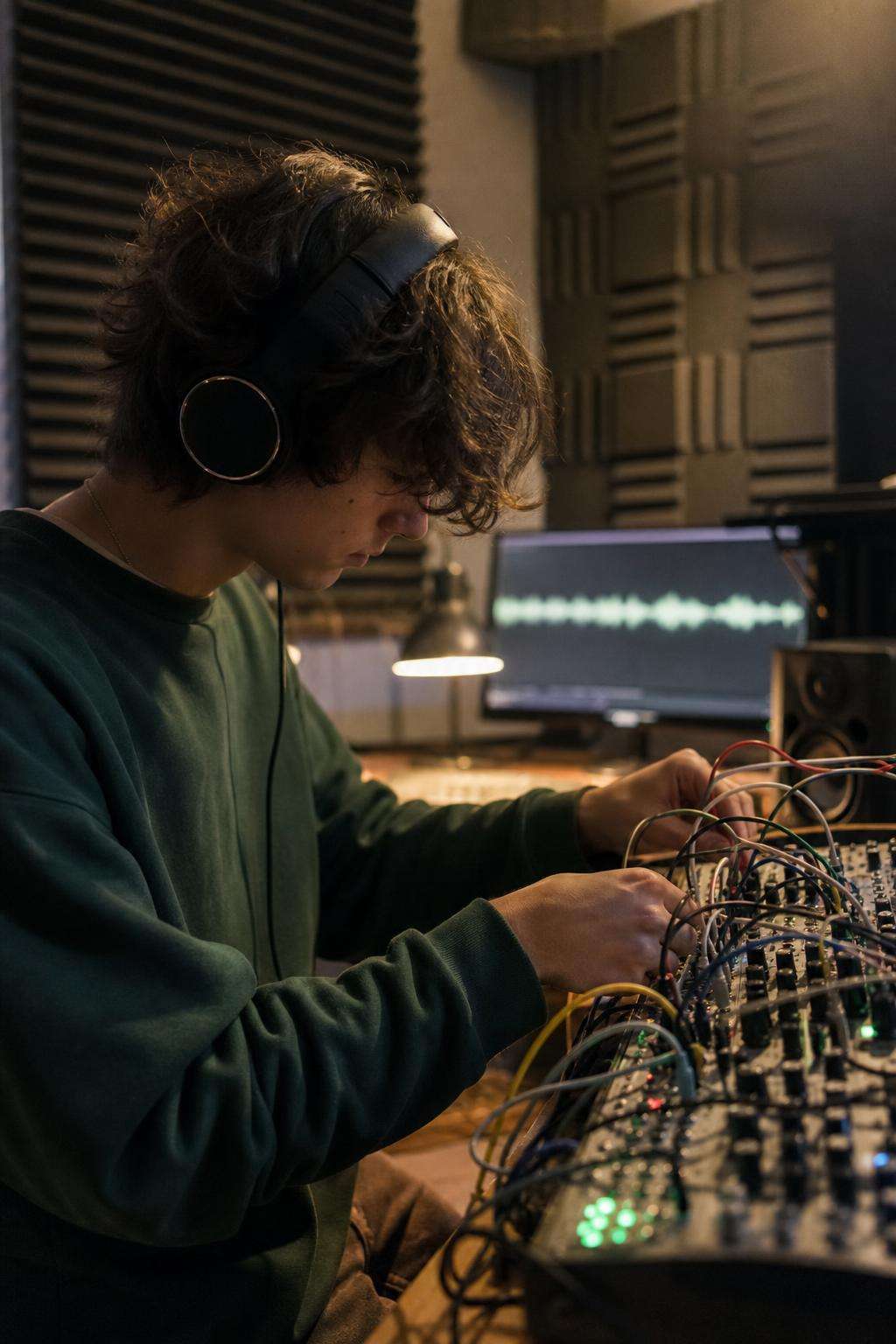
A student patching cables on a modular synthesiser under a lamp

Open sessions

Most of the residency is for the students enrolled on it, but two sessions a week are open to anyone in the school, whatever they study.

SessionWhenWho can come
Listening walkTuesdays, 3pm, from the main entranceAny year group
Open labThursdays, 4pm – 6pmAnyone, no experience needed
Installation tourFriday of week six, 5pmThe whole school, and parents
The open sessions run for all six weeks.

Ines Moreau, who runs the kit store and the radio rota, has set aside a shelf of recorders for the open sessions. As with everything else in the store, you sign nothing: you take it, and you bring it back.

Do I need to know anything about music?

No. Several of the students on the residency have never made a sound piece before. Listening is the skill, and it is taught from the first walk.

Can day pupils come to the evening sessions?

Yes. The studios are open to every student until ten, and the open lab finishes at six.


The installations go up in the final week. If you are in the building that Friday, follow the headphones.

Every studio brought its term to the main hall on Friday and stood beside it. Eleven rooms of work in one, from first-year drawings to Portfolio Year pieces, and the whole school walking between them for an afternoon and most of an evening.

The open crit happens at the end of every term. The rule is the same as the weekly critique each studio holds on a Wednesday, only bigger: you stand next to what you made and account for it, in front of everyone who did not make it. Nothing is marked. The hall was still full at seven.

How an open crit works

  1. On Thursday evening every studio clears a patch of the main hall floor and a length of wall.
  2. On Friday morning the work goes up, studio by studio, with no labels beyond a name and a year group.
  3. At two the doors open to the whole school. Lessons stop for the afternoon.
  4. Every maker stays within reach of their work until five, and anyone can ask them anything.
  5. At five staff and parents arrive, and the conversations start again from the beginning.
The Head of School at a table with two students and their work
Adam Holloway, Head of School, with two students before the doors opened.

Getting the hall ready

The main hall is a working room for the rest of the term, full of long tables, half-finished sculpture and other people’s coffee. Turning it into a place where eleven studios can show a term’s work takes most of Thursday evening. Tables go against the walls, the sculpture moves to the edges, and each studio chalks out its patch of floor.

There is always an argument about the light. The painting studio wants the north end by the windows; the moving image students want the opposite, and a corner they can black out. This year the print room lent the stages a set of screens, which is exactly the kind of thing the afternoon is for.

What people said

The questions at an open crit are rarely the ones a teacher would ask. A first-year asked a Portfolio Year student why her print was so big. A sixth-former asked the Head whether he ever made anything any more. A group of eleven-year-olds spent twenty minutes in front of a single ceramic bowl, and when they finally left, the student who had made it said it was the best feedback she had had all year.

You spend a term with a piece of work and only the people in your studio see it. Then for one afternoon, three hundred people do, and half of them are younger than you and not at all polite about it. It is the most useful day of the term.

A Portfolio Year student, in the evening

Why nothing is marked

Every term someone new to the school asks why the most public moment in the calendar carries no grade. The answer is that a mark ends a conversation, and the point of the afternoon is to start one. Students who show something unfinished are not penalised for it; they are usually the ones who get the most out of the day.

The crit is also how the studios find out about each other. The print room sees what the stages have been doing. The sound students discover that the ceramicists have been recording their kiln. Several collaborations that ended up in last year’s degree show began with a conversation on this floor.

A mark ends a conversation. The point of the afternoon is to start one.

From the school’s own guide to the open crit

The next one

The summer term closes with its own open crit in July, the week after the degree show comes down. In December the building stays open for an evening for the town, not just for parents, and a good deal of what hangs in the hall on Friday will still be in progress then.


The student radio station has broadcast from the sound studio every term since 1991, and it has been run entirely by students the whole time. This week Sound System marks thirty-five years on air with a forty-eight hour broadcast, from six on Friday evening to six on Sunday.

Every presenter who has ever had a show was invited back for an hour. Two hundred and eleven said yes, which is more hours than there are, so the rota is being settled the way it always has been: on the whiteboard by the studio door, in marker, with a great deal of crossing out.

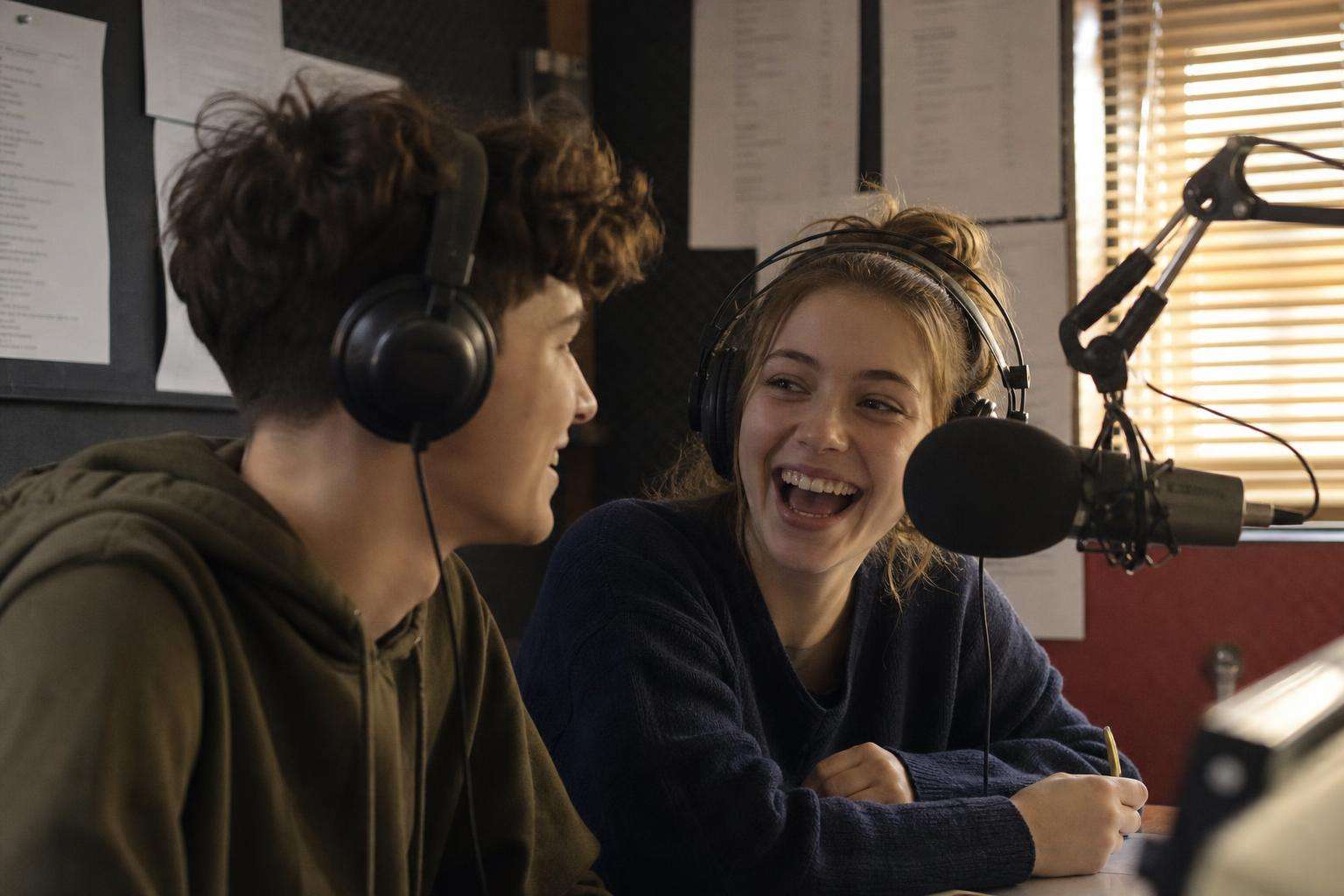
Two students in headphones laughing at a microphone in the radio booth
Morning Shift, the station’s oldest running show, on a Monday at half past seven.

How a student station lasts thirty-five years

It is not a club with a teacher behind it. There is no staff producer and no approved playlist, and the school has never once asked to hear a show before it goes out. What keeps it going is a short set of rules, written in 1991 and taped inside the booth door, which every new presenter reads before their first show.

  • Anyone in the school can have a show. There is no audition.
  • Nobody is on air for more than an hour at a time.
  • If you say you will be there, be there. Dead air is the only thing the station does not forgive.
  • The station belongs to whoever is running it this year.

Ines Moreau, who looks after the sound studio, keeps the equipment working and the whiteboard wiped. Everything else, from the schedule to the jingles to the arguments about the jingles, belongs to the students.

Thirty-five years, in five moments

  1. 1991. The first broadcast goes out from a storeroom next to the music department, on a transmitter that reaches the end of the corridor.
  2. 1998. The station moves into the sound studio, and gets a door with a lock — still the only one on that floor.
  3. 2004. Long Player starts: one album, start to finish, no talking over the songs. It has never missed a weekend.
  4. 2012. The Crit moves from the studios onto the air, and becomes the station’s most listened-to show.
  5. 2026. Thirty-five years, forty-eight hours, and a whiteboard with no space left on it.

The schedule this weekend

ShowNormallyThis weekend
Morning Shift7:30 – 8:15am, Monday to FridaySaturday and Sunday, 7:30am, with former presenters
The Crit8:15 – 9pm, Tuesday and ThursdayFriday, 8pm, live from the main hall
Long Player3 – 4pm, Saturday and SundayBoth days as usual, one album each, start to finish
Alumni hoursNot normally on airEvery hour on the hour, Friday 6pm to Sunday 6pm
Forty-eight hours, one studio, two hundred and eleven presenters.
Three students at a microphone discussing a painting
The Crit: a student brings in a piece of work, and three others talk about it on air.

The only timetable in the school set by seventeen-year-olds.

Sound System, describing itself

Tuning in

In the building, the station plays in the dining hall, the corridors of the digital studio and, famously, the lift. Outside it, the whole forty-eight hours streams from the school site, and former presenters have been told it will be recorded, which some of them regard as a threat.

If you have ever had a show and have not yet been in touch, there is still a waiting list. It is on the whiteboard.

I had a show years ago. Can I still get a slot?

Possibly. The whiteboard is full, but presenters do drop out, and the students running the weekend are keeping a list. Email the school and ask for Sound System.

Can current students still join the station?

Yes, and they do every term. Put your name on the board. The newest presenters usually start with a Saturday afternoon.