Two shortlisted for the Kiln Prize

The Kiln Prize goes to work in fired clay by anyone under nineteen, and it is judged blind: the panel sees the piece and a hundred words from its maker, and nothing else. No names, no schools, no portfolios. Two of the six pieces on this year’s shortlist came out of our ceramics studio.
They belong to Maya Okafor, in the sixth form, and Theo Lindqvist, in the Portfolio Year. Neither of them made the piece they set out to make, and both of them rebuilt their work more than once before it went to the judges. That, as it turns out, is the part of the process the prize tends to reward.
Judged blind
Entries arrive from art schools, sixth-form colleges, community studios and a surprising number of kitchens. Around four hundred were submitted this year. The panel, three working potters and a curator, narrows them to six over two days in a room with the entries on trestle tables and the labels turned face down.
Because the judging is blind, the shortlist is the first moment anyone outside the studio knows whose work it is. Maya found out in a Wednesday critique, when a technician walked in holding a letter and the room stopped talking.
Neither of them made the piece they set out to make. Maya’s cups were supposed to be a single jug. Theo’s vessel collapsed twice on the wheel. The finished work is better because of both of those things, and the judges could see it.
Nadia Bergström, ceramics technician
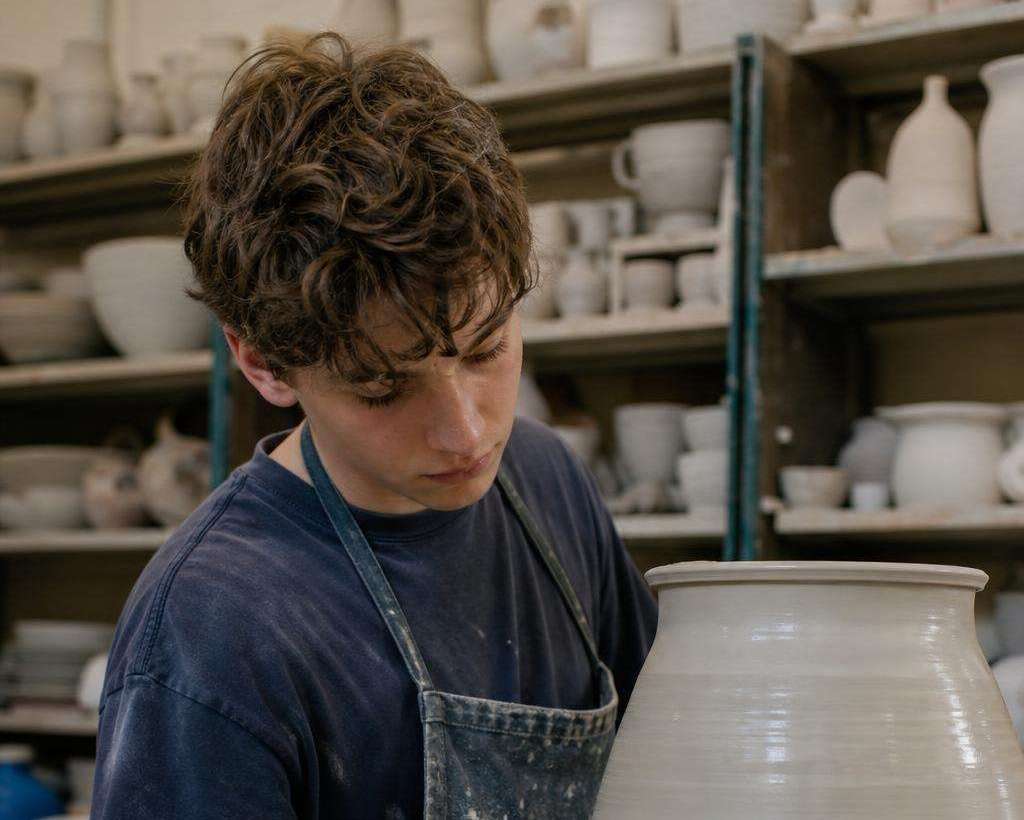
Two pieces, rebuilt
Maya Okafor, sixth form
Maya’s entry is a set of eleven cups, thrown in porcelain and glazed in a single pale celadon, each a little shorter than the one before. It began in October as a jug. The jug would not hold its handle, and after the third attempt she cut the body into rings to see where the wall was failing, liked the rings more than the jug and started again with cups.
The set took four firings to get right. The first glaze crawled, the second was too green, and the third cracked two of the cups in the kiln, which is why there are eleven rather than twelve. Her hundred words for the judges end with the sentence: the missing cup is part of the set.
Theo Lindqvist, Portfolio Year
Theo’s piece is a single tall vessel, just under a metre, fired in the school’s wood kiln. It collapsed twice on the wheel at full height, so the version that survived was built in three thrown sections and joined when leather hard. The joins are still visible under the ash glaze, and he decided to leave them that way.
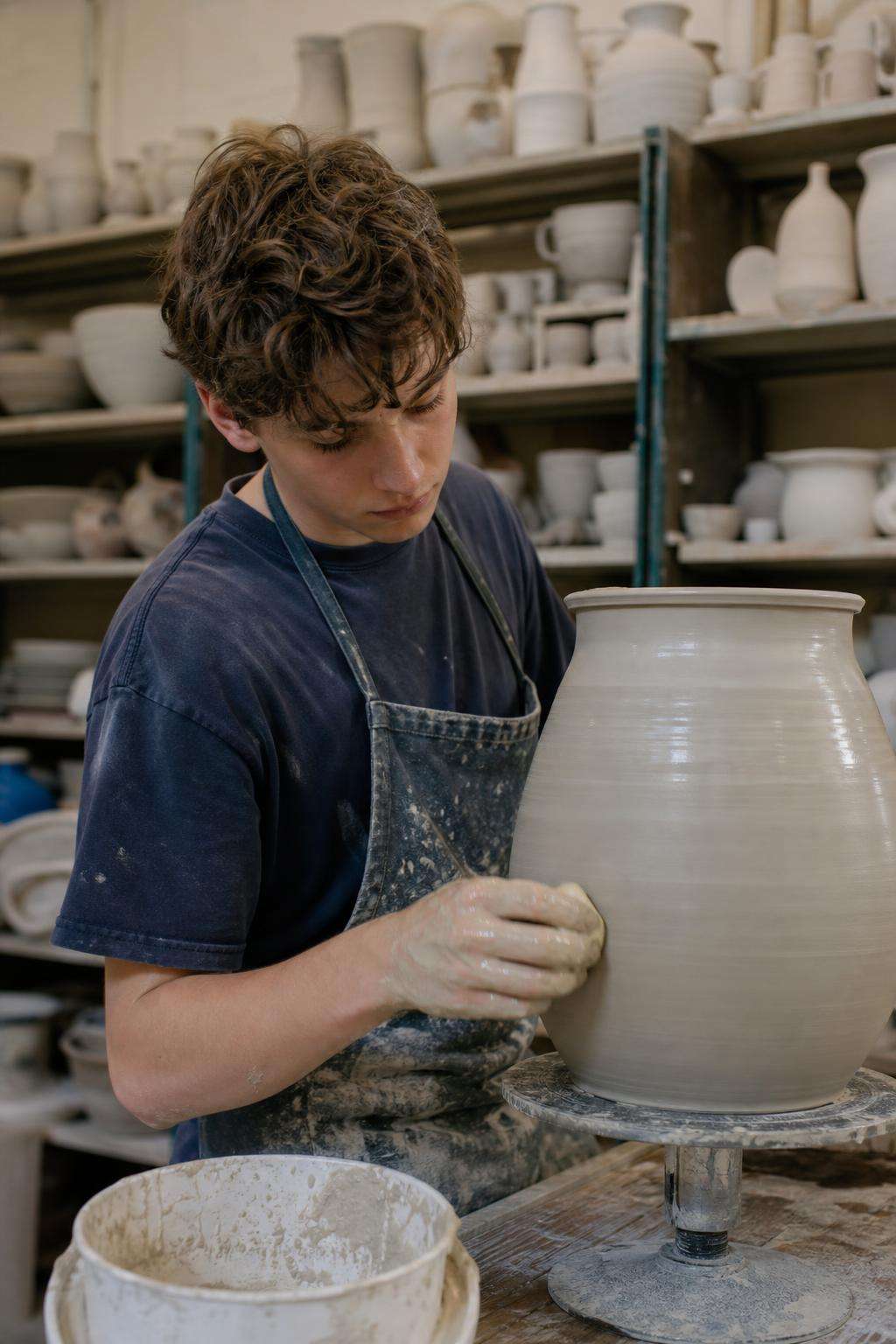
Four firings a year
The wood kiln is fired four times a year over two-day shifts, and anyone who has work in it takes a turn at stoking through the night. Theo’s vessel went into the spring firing.
- Lit at six in the evening
- Stoked in two-hour shifts
- Held at temperature for a day
- Opened after three days of cooling
What happens next
- All six shortlisted pieces travel to the prize exhibition in June, where they are shown alongside a selection from the long list.
- The judges see the six pieces together, in person, for the first time.
- The winner is announced at the opening, and receives a bursary for materials and a week in a working pottery.
- Every shortlisted piece is shown for a month afterwards, and then comes home to the studio.
The missing cup is part of the set.
Maya Okafor, from her statement for the judges
Whatever happens in June, both pieces will be back on the ground floor for the degree show, and both makers will be in the building to talk about them. The ceramics studio is open to anyone who knows how to use it until ten every night, and the wheels are rarely all free.

